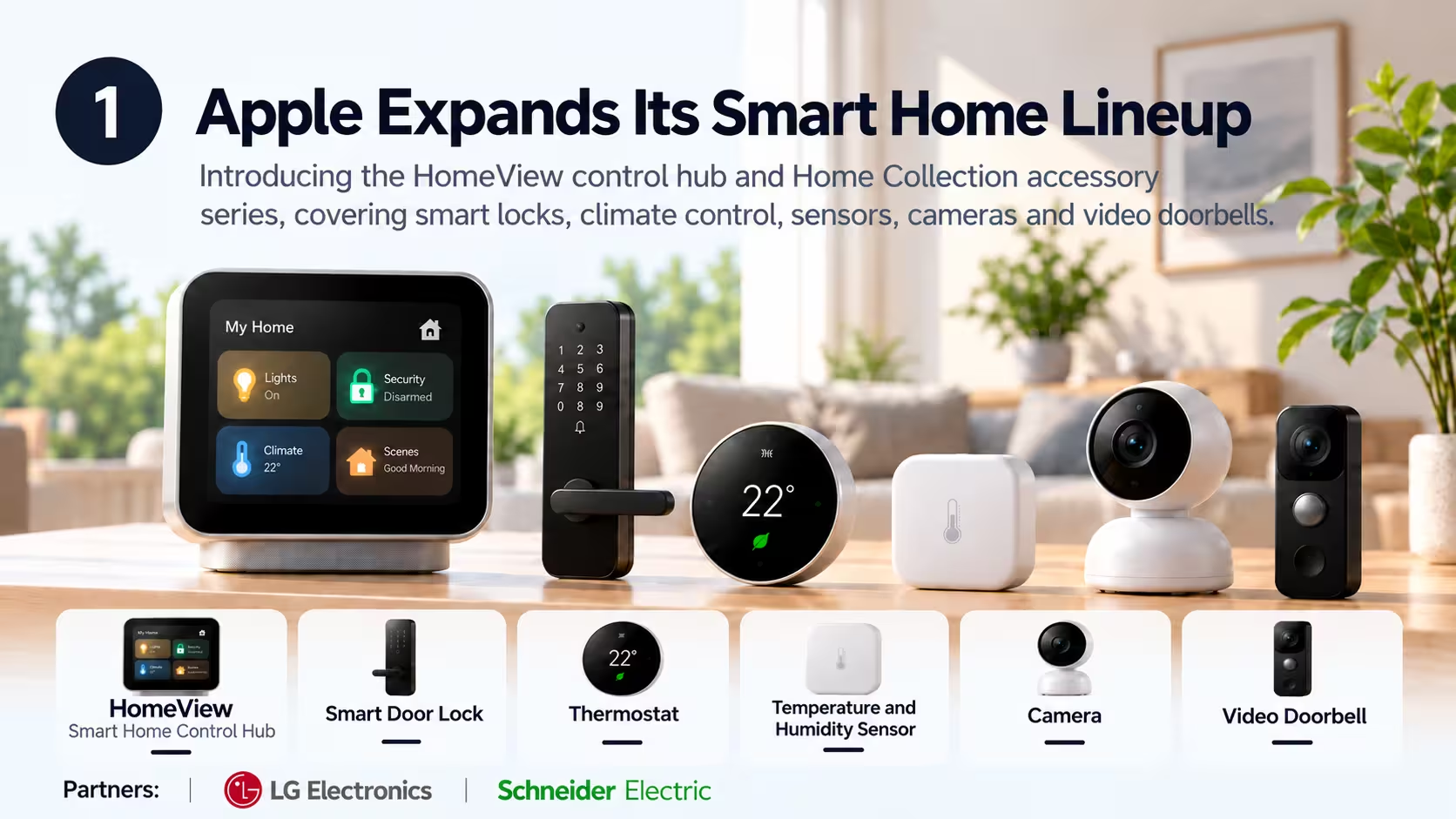
Apple has introduced HomeView and the Home Collection, expanding its smart home lineup with locks, thermostats, sensors, and other connected devices. As Matter reaches more product categories, brands, module vendors, and OEMs must also address device identity, DAC certificates, secure provisioning, and scalable manufacturing.
On October 13, 2026, Apple introduced HomeView, a smart home control device scheduled to go on sale on November 13. HomeView serves as both a Matter controller and a Thread border router.
Apple also announced the Apple Home Collection, a range of smart home accessories including smart locks, thermostats, sensors, cameras, and video doorbells. The collection will begin rolling out in December, with availability varying by product and region. Smart locks and thermostats will initially target North America, while some accessories are expected to launch in early 2027. All accessories in the collection support Thread, while the smart locks, thermostats, and temperature and humidity sensors are explicitly confirmed to support Matter.
The announcement not only expands Apple's smart home product lineup but also brings Matter back into the spotlight. As major technology companies continue investing in smart home products, Matter is moving beyond basic device connectivity into a wider range of product categories and applications. This shift also brings new requirements for mass production.
Apple has long been a key supporter of the Matter standard. In 2019, Apple joined Amazon, Google, and the Zigbee Alliance (now the Connectivity Standards Alliance, or CSA) to launch Project CHIP, the initiative that eventually became Matter. Together, they worked toward a unified connectivity standard for smart home devices.
After Matter 1.0 was released in 2022, Apple Home began supporting Matter, allowing compatible devices from different brands to connect to the Apple Home ecosystem.
Over the past few years, Apple has primarily provided smart home connectivity and control through the iPhone, HomePod, Apple TV, and Home app. This time, Apple is taking a step further with HomeView, a dedicated home control device, and a new range of accessories developed in partnership with LG Electronics and Schneider Electric. The lineup extends into home access, climate control, and security.
Among the accessories, the LG Smart Deadbolt Lock supports both Matter and Aliro, the digital access standard developed by CSA. Smart thermostats and temperature and humidity sensors from LG and Schneider Electric also support Matter.
Although not every product in the new lineup uses Matter, Apple's move from platform support toward a broader hardware portfolio could help bring Matter into more real-world applications.
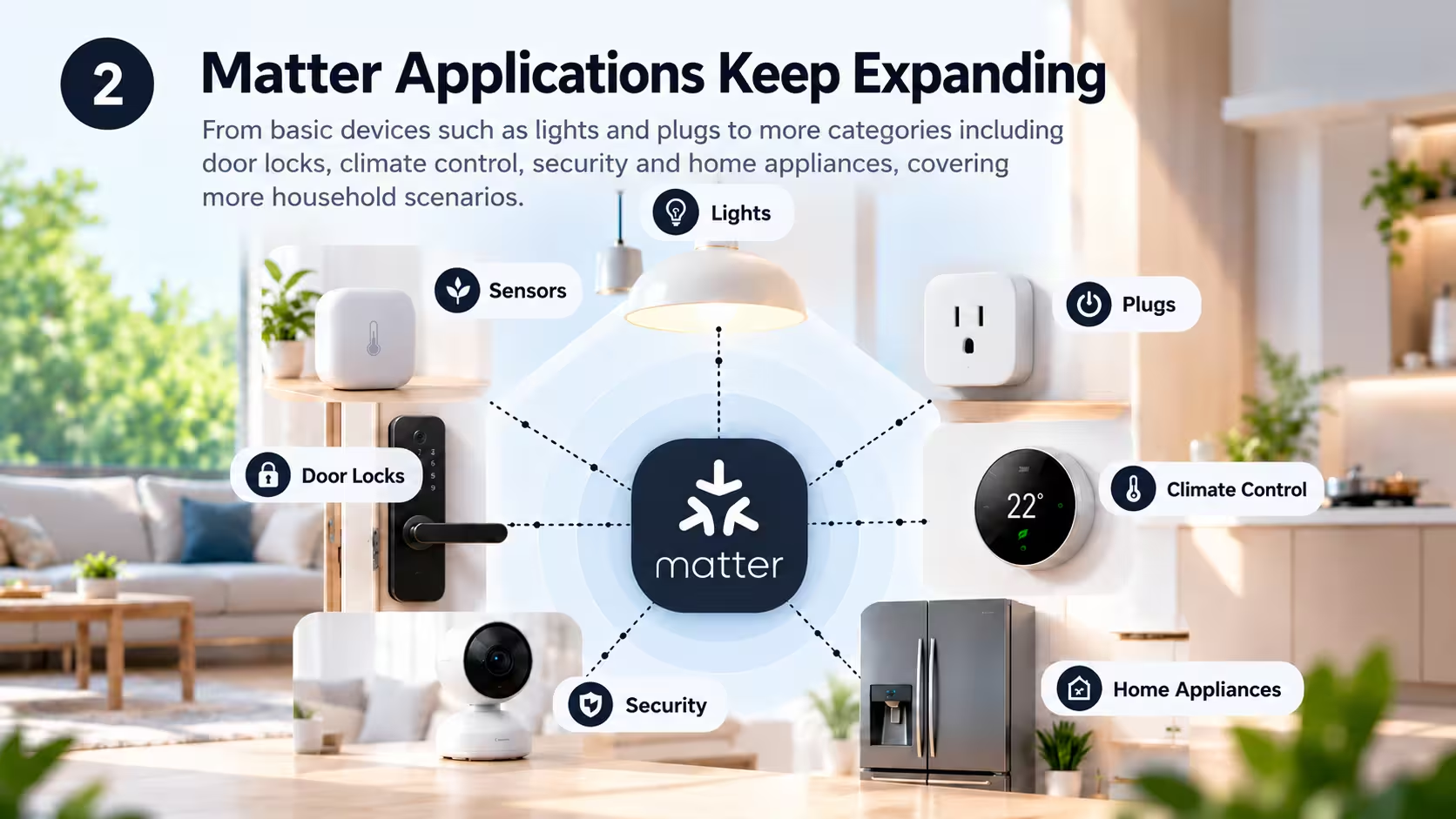
Matter support is gradually expanding beyond basic devices such as smart lights, plugs, and switches. Matter 1.5, released in November 2025, added support for cameras and soil sensors, standardized and enhanced control for devices such as window coverings and garage doors, and expanded energy management capabilities.
Matter 1.6, released in June 2026, introduced a complete NFC-based commissioning process, enabled multiple controllers to manage the same Matter network through Joint Fabric, and added features such as thermostat suggestions. Apple also introduced cameras and video doorbells in its latest lineup, but the company has not yet explicitly confirmed whether these products support Matter. It is worth noting that support for a device category in the Matter standard does not mean every product in that category supports Matter.
As major smart home platforms such as Apple, Google, Amazon, and Samsung continue supporting Matter, more device manufacturers are including the standard in their product plans.
For consumers, Matter can reduce connectivity barriers between devices from different brands. For manufacturers, a common standard creates opportunities for a single product to work across multiple smart home ecosystems, reducing duplicate development and integration work.
However, the features and user experience available in practice still depend on device capabilities, Matter versions, and platform support.
The expansion of the Matter ecosystem creates more product opportunities for smart home brands, module vendors, and OEMs. It also raises the requirements for mass production.
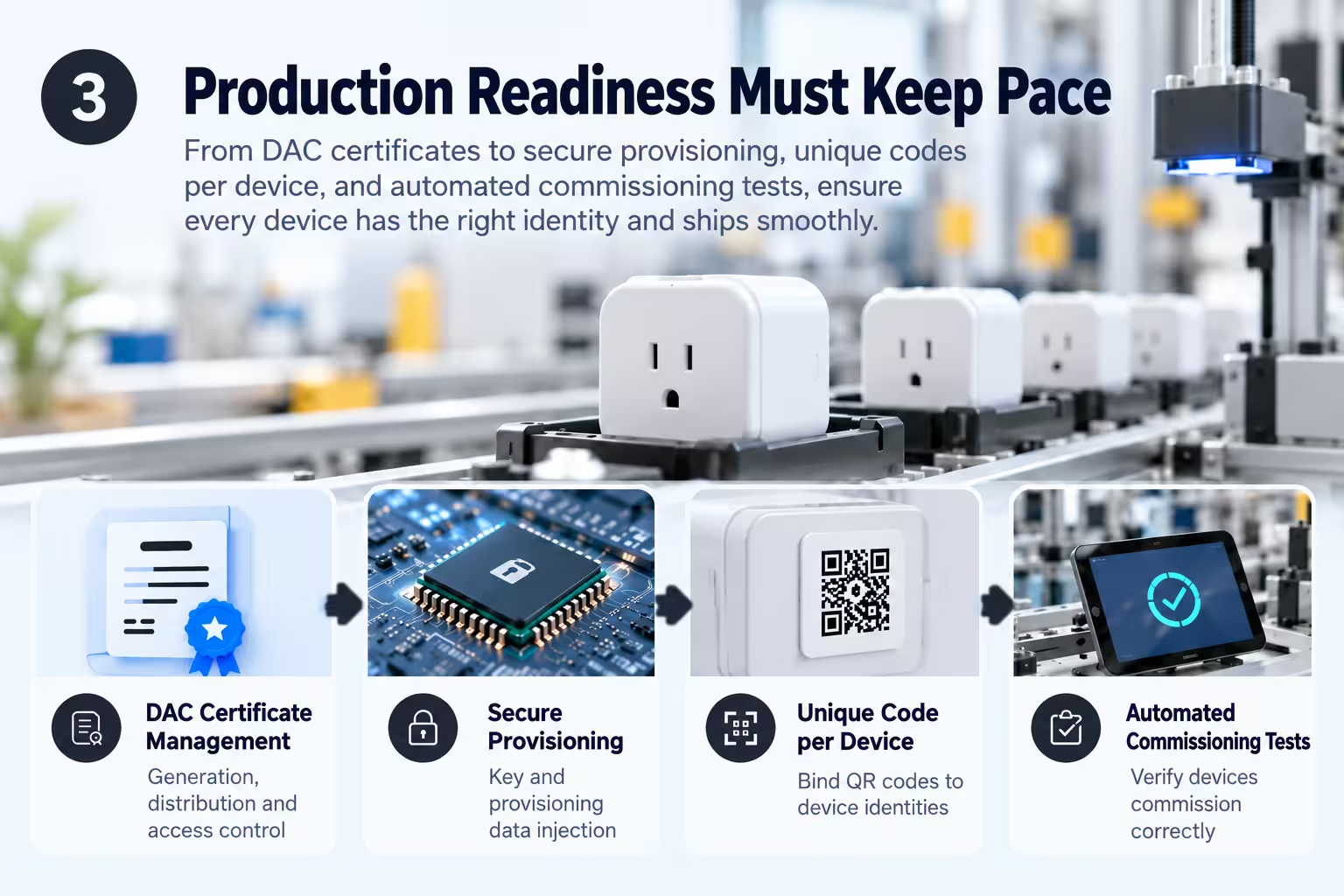
Once a Matter product has completed development and certification, manufacturers still need to ensure that every shipped device has the correct device identity, Device Attestation Certificate (DAC), keys, and commissioning data. The DAC is used to verify that a device is an authentic product associated with the Matter certification framework. Manufacturers must also ensure that each QR code matches the correct device.
When production involves multiple chip platforms, factories, or brand customers, manufacturers also need to manage product configurations, production authorizations, and device records. These challenges may not be obvious during prototyping, but they can directly affect production efficiency and delivery quality at scale.
Snowball Technology's OnBoard™ IoT Security (OBIS) platform supports Matter device mass production with capabilities including DAC certificate management, secure device provisioning, QR code management, and automated commissioning tests. It helps device manufacturers manage digital assets during production and maintain traceable device manufacturing records.
Apple's growing involvement and the expansion of Matter-supported product categories bring new opportunities, but they also raise the bar for mass production. For companies planning to enter or expand their Matter business, keeping up with standards and market developments is only part of the work. They also need stable, scalable production capabilities to bring products successfully from development to market.