The Cyber Resilience Act defines what manufacturers must achieve, but not exactly how to achieve it. Harmonized Standards provide the practical path to demonstrating CRA compliance and are becoming an essential part of every IoT OEM's compliance strategy.
The Cyber Resilience Act (CRA) establishes a common set of cybersecurity requirements for products with digital elements sold in the European Union. However, the regulation itself does not explain every technical detail of how manufacturers should implement those requirements.
To help bridge that gap, the European Commission has asked the European Standards Organizations (CEN, CENELEC, and ETSI) to develop Harmonized Standards that support the implementation of the CRA. For IoT OEMs, these standards will become an important part of the compliance journey.
A simple way to understand the relationship is:
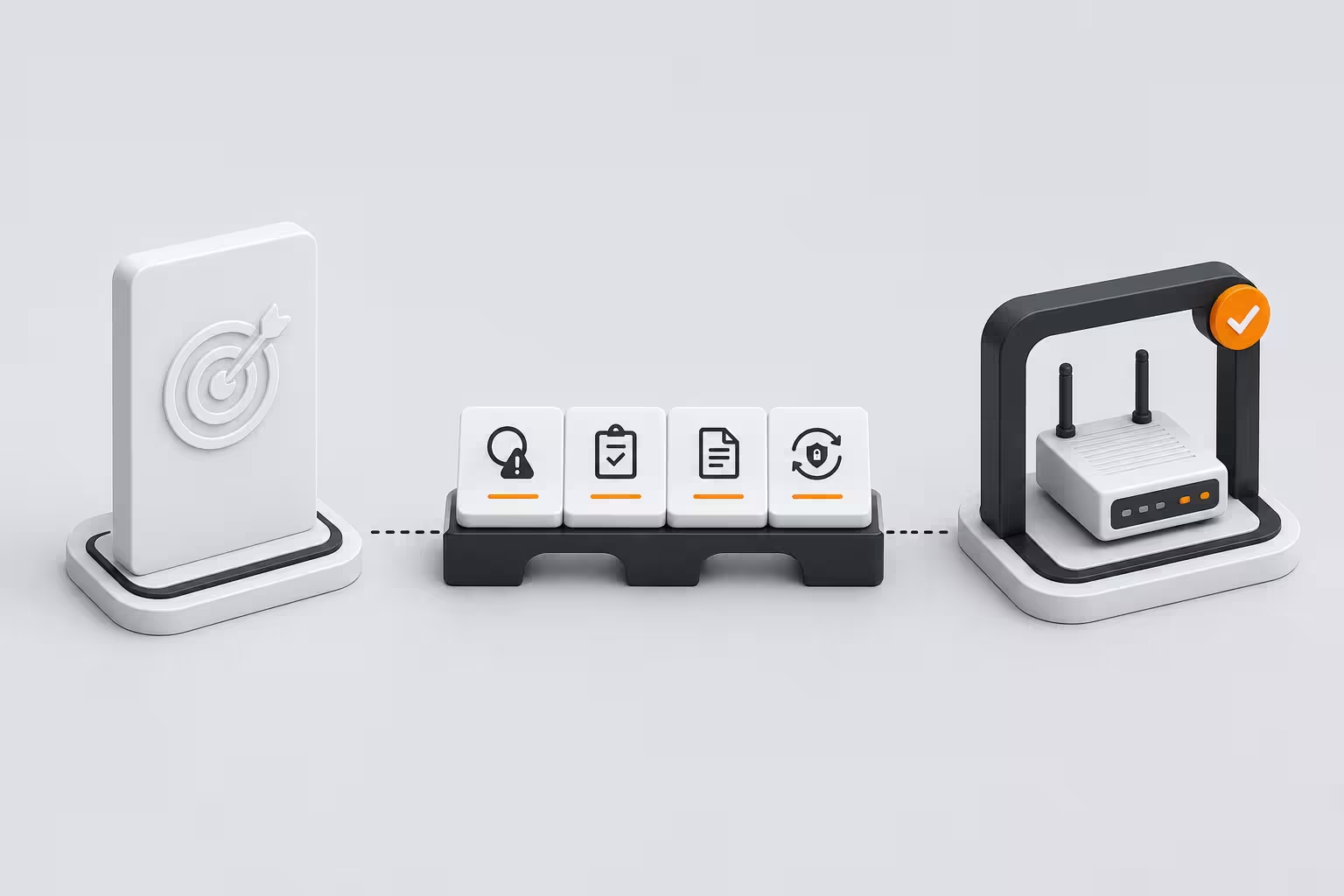
For example, the CRA requires manufacturers to:
The regulation explains what is expected, while the standards provide guidance on how those expectations can be implemented and assessed.
Many manufacturers assume that reading the CRA is enough. In reality, demonstrating compliance is often just as important as implementing security features. Harmonized Standards are expected to provide a common technical basis for conformity assessments, making it easier for manufacturers to demonstrate that their products meet the CRA requirements. This is particularly valuable when preparing technical documentation, supporting CE marking, and communicating with regulators or customers.
Meeting the CRA is not simply about adding encryption, secure boot, or authentication.
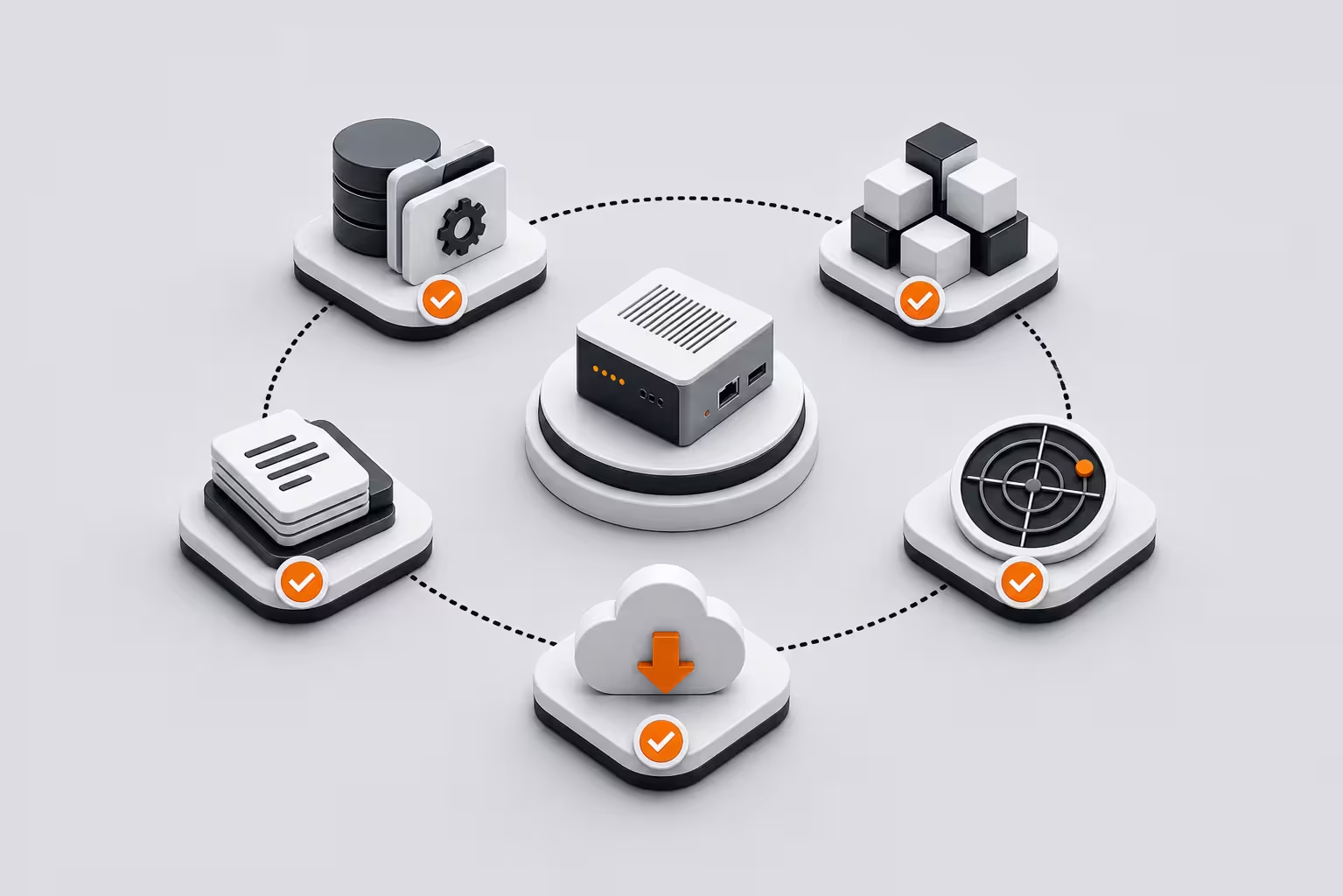
Manufacturers also need consistent processes for:
These operational capabilities are increasingly becoming part of compliance, not just product security.
Although many Harmonized Standards are still under development, manufacturers do not need to wait before preparing. Organizations can already begin by:
These practices not only support today's security needs but also prepare organizations for future CRA compliance.
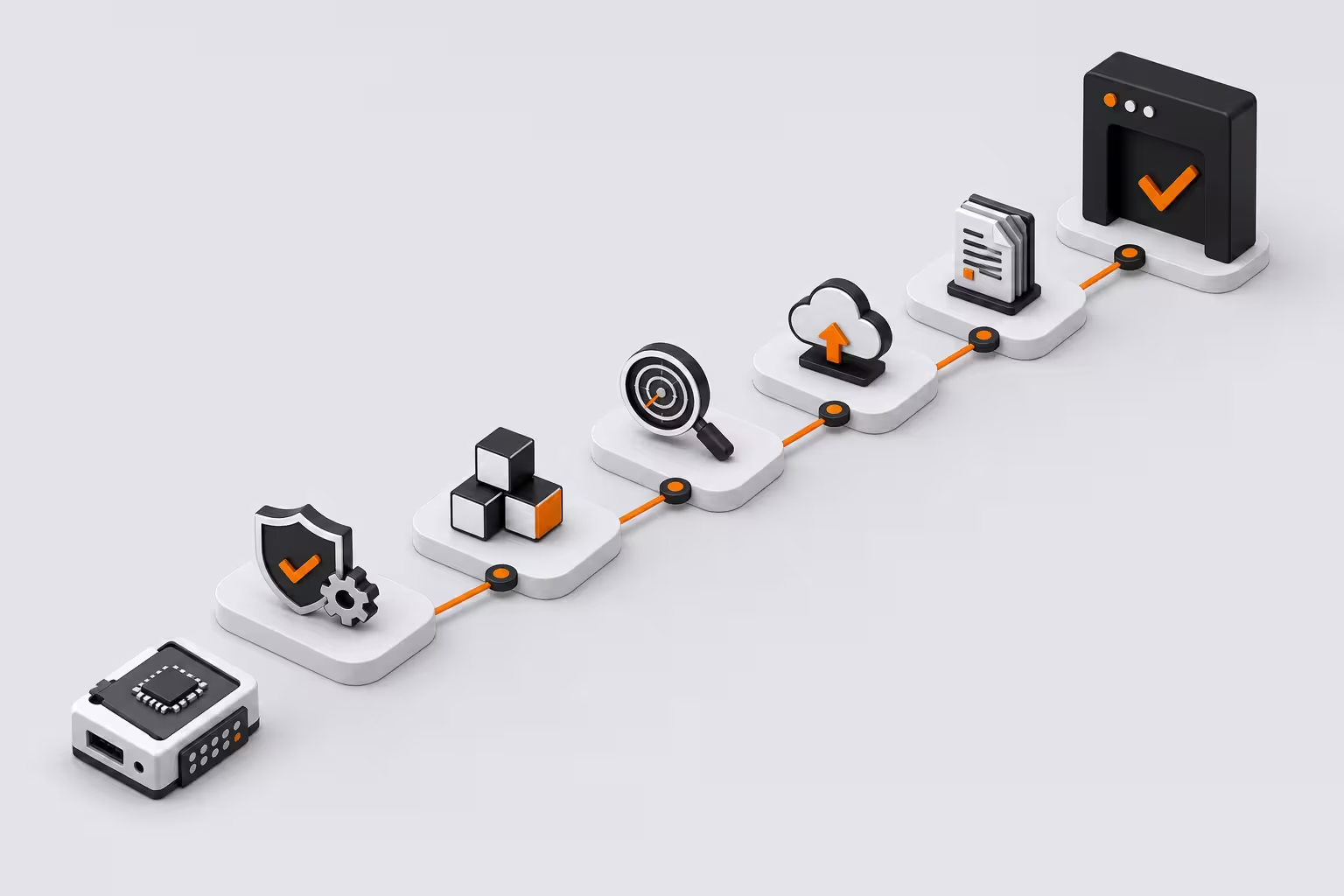
The CRA defines the destination. Harmonized Standards help manufacturers understand the road to get there. For IoT OEMs, compliance will increasingly depend not only on secure products, but also on standardized processes that can be consistently demonstrated and maintained throughout the product lifecycle.