Matter 1.6 moves beyond device interoperability by strengthening onboarding, multi-ecosystem collaboration, security management, and device lifecycle capabilities. This article explores key updates including NFC-Based Commissioning, Joint Fabric, device capability communication, security event history, and what they mean for module vendors and OEMs.
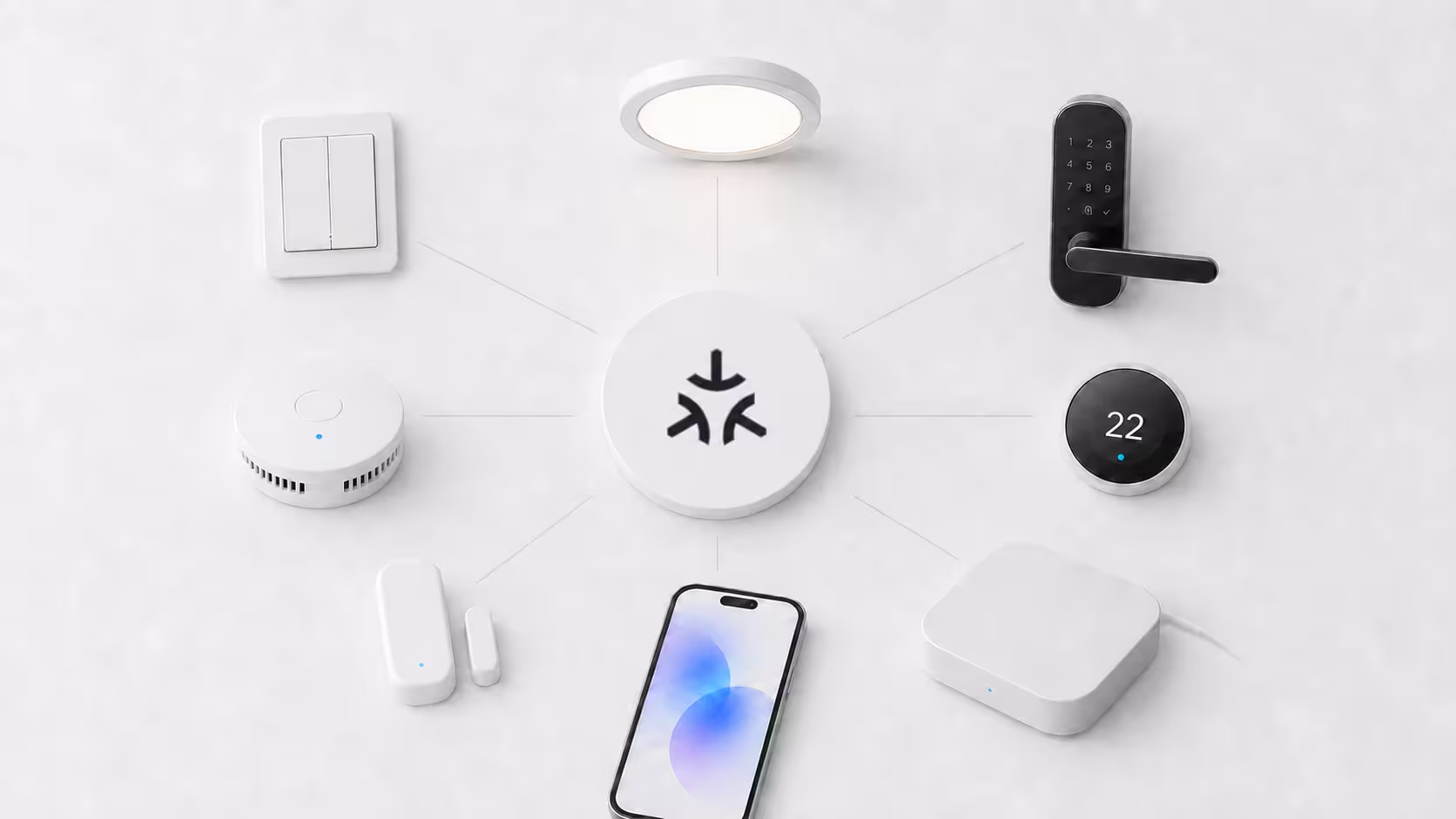
With the continued growth of smart home, smart building, and IoT deployments, the industry focus is gradually shifting from "whether devices can connect" to "how devices can be efficiently deployed, securely managed, and operated throughout their lifecycle."
Recently, the Connectivity Standards Alliance (CSA) officially released Matter 1.6. Unlike previous releases that introduced large numbers of new device categories, Matter 1.6 focuses on improving several key areas, including device onboarding experience, multi-ecosystem collaboration, device capability representation, autonomous device cooperation, security event management, and device identity lifecycle maintenance.
For consumers, these changes may not immediately appear as visible product features. However, for semiconductor vendors, wireless module manufacturers, solution providers, and OEM companies, Matter 1.6 will directly impact product definition, hardware design, SDK development, device certification, and mass production processes.
If early Matter releases mainly focused on solving "how devices from different brands can connect and interoperate," Matter 1.6 is moving further toward solving "how devices can be configured, managed, maintained, and continuously trusted throughout their lifecycle."
From an industry perspective, Matter is gradually evolving from a device interoperability protocol into a foundational technology for intelligent device lifecycle management.
Matter 1.6 enhances NFC-Based Commissioning capabilities, further expanding options for device initialization and deployment. Compared with traditional QR Code onboarding or manual code entry, the key improvement in Matter 1.6 is that NFC is no longer only a method for carrying onboarding information. Instead, it can support a more complete device commissioning workflow.
In Matter 1.4.1, NFC was already able to carry onboarding payload information, but the subsequent commissioning process still relied on Bluetooth LE. Matter 1.6 further enhances NFC commissioning capabilities, enabling devices to complete a more comprehensive initialization process through near-field communication.
The biggest industry impact is that devices supporting NFC-Based Commissioning can be initialized before installation or even before the device is connected to main power. For example:
Compared with QR-code-based onboarding, NFC also helps address long-term maintenance challenges. For devices such as ceiling lights, wall switches, and smart locks, QR codes may become inaccessible after installation because they are located on the back of the device or hidden behind installation structures. When users need to replace networks or reconfigure devices, NFC can reduce the need for physical removal and reinstallation.
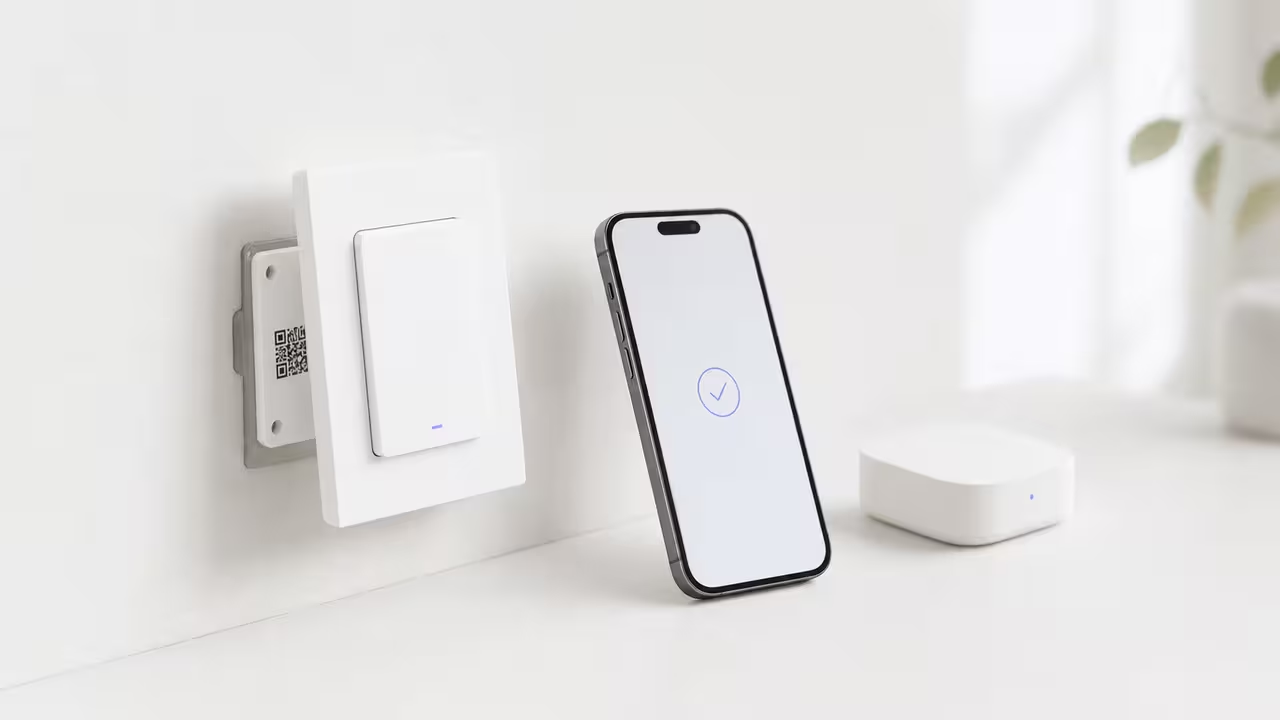
For module vendors, NFC-Based Commissioning is not simply about adding NFC hardware support. It requires integration with Matter commissioning workflows, secure communication mechanisms, and device identity management capabilities, including:
For OEMs, this capability will accelerate the transition from "commission after installation" toward "preconfigured manufacturing and rapid field deployment."
This approach is particularly suitable for large-scale commercial scenarios such as smart buildings, hotels, apartments, and enterprise IoT deployments.
In traditional Multi-Admin scenarios, a device may need to maintain relationships with multiple Fabrics. Different ecosystems establish separate authorization relationships, increasing the management burden for device-side Fabric tables, credentials, and access-control information.
Matter 1.6 introduces the Joint Fabric mechanism, further extending Matter’s Multi-Admin capabilities. It allows multiple authorized Controllers to collaboratively access and manage devices based on a shared Fabric.
Previously, smart devices were typically designed around a single ecosystem control model. Users purchased a device and managed it through one specific platform application. Beyond improving multi-ecosystem collaboration, Joint Fabric also provides important benefits for device resource management.
By sharing a common Fabric architecture, multiple authorized Controllers can manage devices collaboratively while reducing the credential and resource overhead caused by maintaining multiple independent Fabrics.
For devices, joining a Joint Fabric consumes only one Fabric capacity slot, allowing devices to preserve additional capacity for traditional ecosystem Fabrics.
For semiconductor and module vendors, Matter support is no longer only about whether protocol functionality is implemented. Vendors also need to evaluate:
Especially for resource-constrained MCU platforms, Fabric resource planning may determine whether products can support more complex commercial deployment scenarios.
In commercial applications, a device often needs to support multiple management roles. For example, in a smart hotel environment, lighting, air conditioning, and door lock devices need to support:
Under traditional approaches, different systems may need to bind and manage devices separately, increasing operational complexity. Joint Fabric provides a more standardized collaboration model, allowing multiple authorized parties to share device access capabilities.
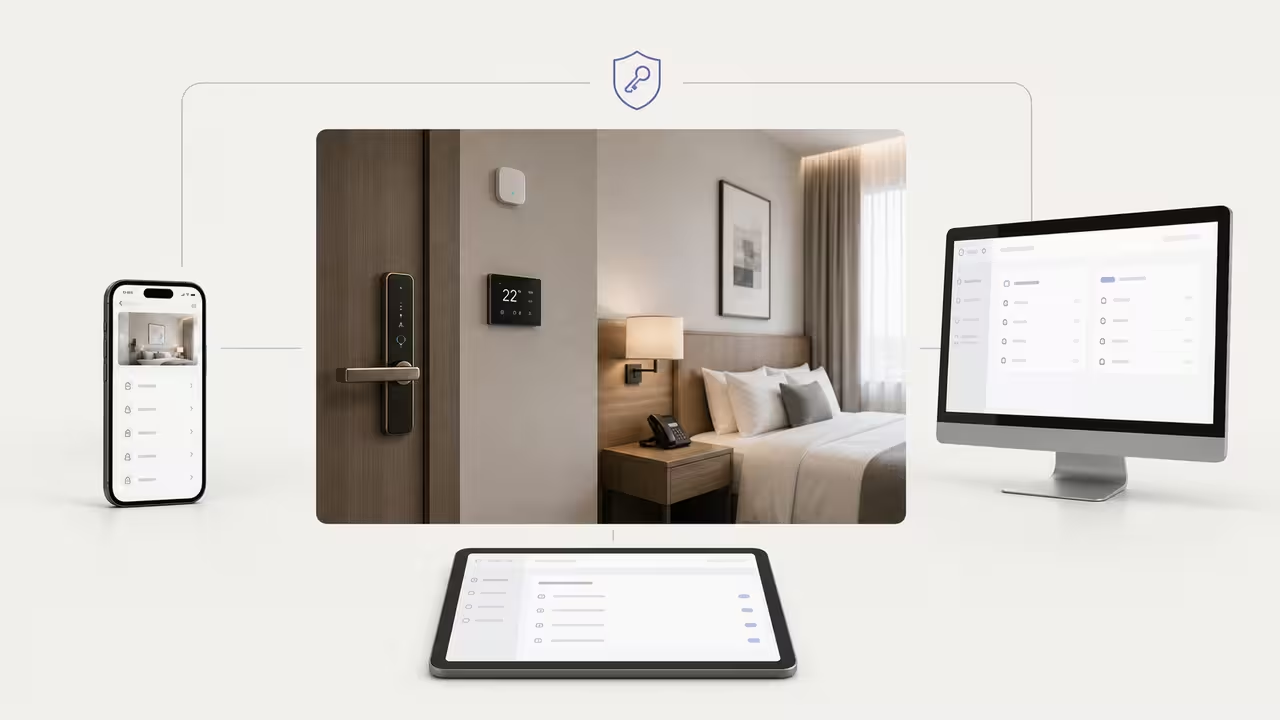
For module vendors, attention should be paid to Matter SDK support for Joint Fabric scenarios, including:
For OEMs, device management logic needs to evolve from "Who can control this device?" to "Who can manage this device, with what permissions, and during which period?"
For example:
After checkout, access permissions can be automatically adjusted according to business policies.
This means OEMs need to consider not only device connectivity, but also authorization lifecycle management and long-term operational capabilities.
Matter 1.6 introduces the Thermostat Suggestions feature for thermostat devices, changing the traditional model where "controllers send commands and devices simply execute them."
These suggestions are typically associated with thermostat presets. The thermostat can decide whether to accept and apply a suggestion based on user preferences, current environmental conditions, and existing operating behavior.
For example, in smart energy management scenarios, utility providers may want users to reduce HVAC consumption during peak demand periods.
In traditional approaches, a system may directly modify the temperature setting. With Matter 1.6, a thermostat can evaluate whether to accept the adjustment suggestion based on factors such as:
For thermostat and HVAC manufacturers, this requires attention to both device-side logic and application-layer support for suggestion mechanisms.
This also reflects a broader direction for Matter’s future development: devices will no longer simply execute control commands but will participate in intelligent collaboration by combining their own state information and operational context.
Matter 1.6 enhances mechanisms for describing device capabilities and limitations, allowing devices to communicate their supported features and constraints more accurately to controllers. Previously, ecosystem platforms often inferred device functionality based on device categories.
For example, two products may both be categorized as smart lights, but their actual capabilities may differ significantly. One model may support:
Another model may only support basic on/off functionality. If platforms rely only on device categories, they may not accurately represent the actual capabilities of each product.
Through enhanced capability and limitation communication, devices can explicitly describe their supported functions and restrictions, enabling ecosystem platforms to provide more accurate control experiences.
For module vendors, this requires Matter data models and SDK implementations to flexibly represent different product capabilities.
For OEMs, this capability can reduce adaptation costs when bringing different product models into multiple ecosystems, allowing platforms to provide user experiences based on actual device capabilities.
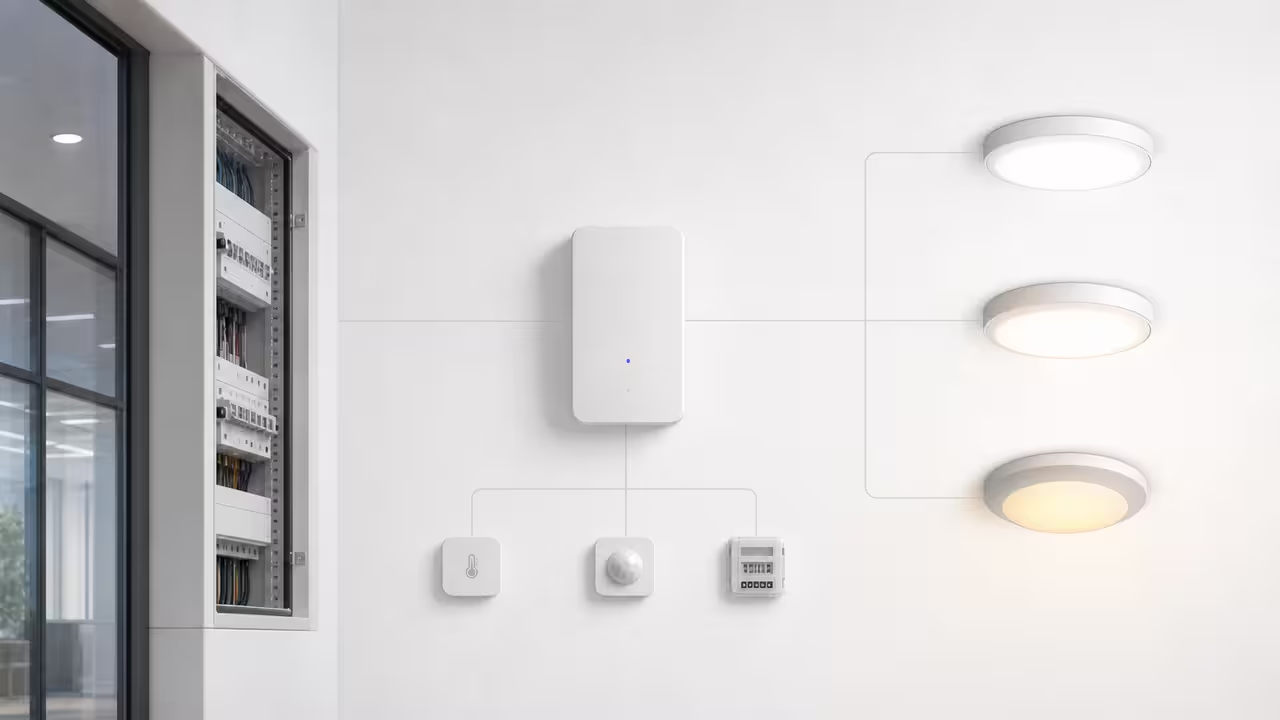
Matter 1.6 enhances standardized support for security sensor event history, enabling ecosystem platforms to access historical event information supported by devices.
This allows ecosystems to understand not only the current state of a device but also what happened previously.
Traditionally, security devices focused primarily on real-time status information, such as:
However, in practical deployments, users and management platforms often need historical information to analyze device behavior.
For example, a smart door sensor may previously only report: "The door is currently closed."
With event history support, the device can provide standardized historical security events to the ecosystem, allowing platforms to understand both current conditions and previous activities.
When abnormal situations occur, users can analyze historical records to determine whether unusual access events have taken place.
For module vendors, key considerations include:
For OEMs, this capability enables security devices to evolve from simple status-reporting devices into intelligent terminals with event tracking and analysis capabilities.
Matter 1.6 adds support for reporting the unmounted state of smoke alarms and carbon monoxide (CO) alarms, allowing devices to communicate whether they are currently installed in their intended operating position.
In real-world scenarios, safety devices may remain connected to the network while being temporarily removed from their installation location, for example:
Without awareness of this condition, systems may incorrectly assume that the device is still providing active protection.
With the new status capability, smoke and CO alarms can report whether they are properly installed.
For example, after a user removes a smoke alarm for maintenance, the smart home system can recognize that the device is currently unmounted and remind the user to reinstall it instead of assuming the safety protection remains active.
This capability primarily benefits safety device manufacturers, but it also demonstrates Matter’s continued evolution toward more accurate device state representation.
Matter 1.6 continues the security infrastructure evolution introduced in previous releases.
Matter 1.4.2 introduced support for Partitioned Certificate Revocation Lists (CRLs). Compared with traditional CRLs, this approach divides revocation information into smaller independently updateable partitions, improving scalability for large-scale device deployments.
For large deployments such as:
device identity management is no longer a one-time manufacturing activity.
Instead, it must cover the entire device lifecycle, including:
For module vendors, key considerations include:
For OEMs, a complete device identity management strategy needs to cover manufacturing, deployment, and operational stages.
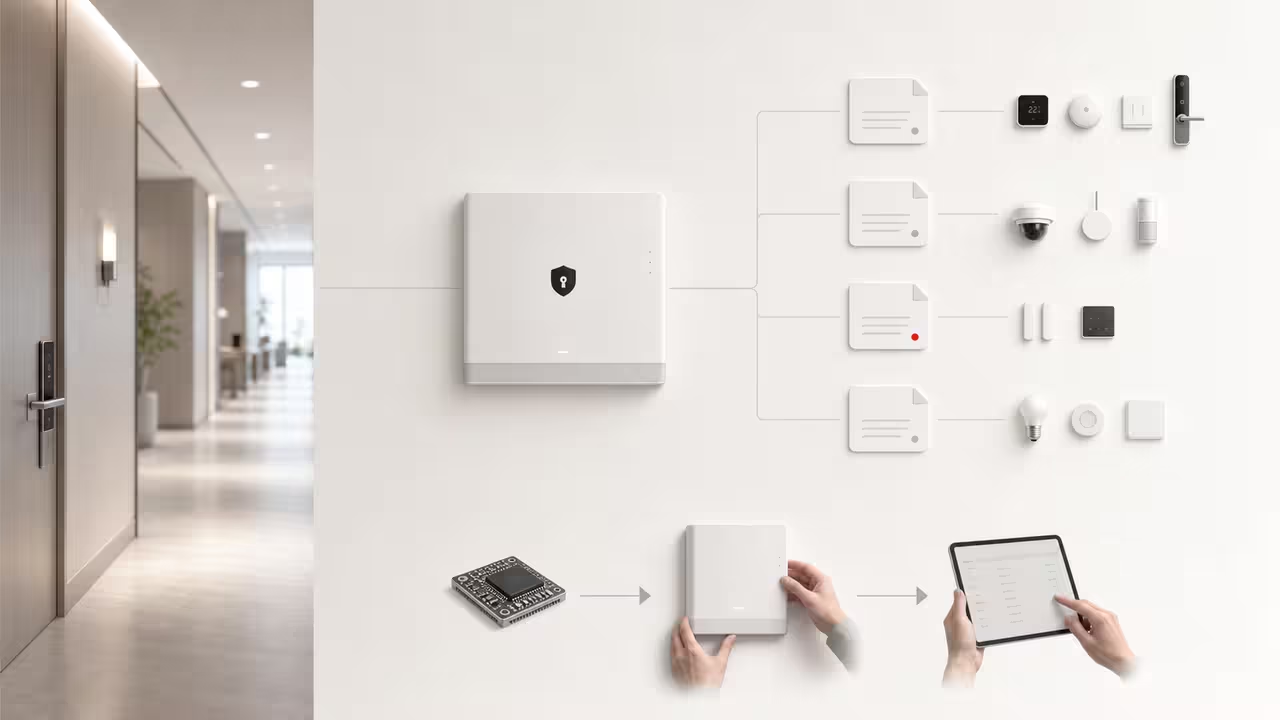
From an industry perspective, the core value of Matter 1.6 is not simply adding more device categories. Instead, it strengthens key stages throughout the device lifecycle.
The major improvements include:
For module vendors and OEMs, the biggest change brought by Matter 1.6 is that product development is moving from "supporting the Matter protocol" toward "building complete device lifecycle capabilities."
Future smart hardware competition will no longer depend only on connectivity and protocol compatibility. It will increasingly depend on:
In addition, Matter 1.6 further promotes the development of devices with stronger sensing capabilities and context-aware interactions.
By combining environmental information and operational states, smart devices can participate in more intelligent collaboration, creating the foundation for future environment-aware IoT systems.
Matter is evolving from a device interoperability protocol into a foundational standard covering:
For semiconductor vendors, module manufacturers, and smart hardware companies, early investment in Matter 1.6 capabilities will help improve product adaptability and deployment value across smart home, smart building, and commercial IoT scenarios.
Matter 1.6 Enables More Intuitive Setup, Multi-Ecosystem Experiences, and Context-Driven Control