When a Matter QR code is lost or damaged, recovering commissioning information can be difficult—even if the manufacturer still has the original production data. The key is being able to identify the device and match it to the correct record.
.avif)
A Matter device may work perfectly for years, until one day the user needs to reconnect it. Perhaps the home router has been replaced, or the device has been factory-reset. The user opens the app and is asked to scan the QR code on the device. But when they turn the device over, the QR code is worn out and unreadable.
Customer support suggests checking the setup code in the user manual. Unfortunately, the device has been in use for years, and the manual and original packaging are long gone.
Now the user faces a frustrating situation: the device still works, but without its commissioning information, it may no longer be possible to connect it to the smart home ecosystem.
A common question is: “Can’t the manufacturer just look up the QR code and send it to me?”
The problem is that the manufacturer may still have the device’s production data, but may not know which record belongs to the specific device in the user’s hands.
The problem is not necessarily missing production data. In many manufacturing processes, QR codes, commissioning information, and device production records are stored during production. The real challenge comes later: once the QR code is lost, how can the manufacturer identify the physical device and match it to the correct record?
Consider a factory producing a batch of smart locks. During manufacturing, each lock receives its own commissioning information. The production line uses that information to generate a QR code, which is printed on the device or included in the user manual. Everything works as expected when the product leaves the factory. The customer scans the QR code and completes commissioning.
A few years later, however, the label becomes unreadable and the packaging has been discarded. Even if the manufacturer still has complete production records, customer support must first determine which record belongs to that particular lock.
Without a reliable way to identify the device and look up its corresponding data, even a complete production database may not be enough to recover the commissioning information.
.avif)
A missing QR code looks like an after-sales problem. But whether the commissioning information can be recovered depends on more than simply storing it during production. The manufacturer also needs a way to identify the device later and link it back to the correct production record.
During manufacturing, each device should be associated with its commissioning information through a reliable device identifier. Depending on the product architecture, this could involve a serial number, device ID, MAC address, or another manufacturer-defined identifier.
These relationships should be stored alongside the device’s production records. More importantly, the manufacturer needs a way to identify the device after it has entered service, using information that can still be obtained from the device. This allows the manufacturer to reconnect the physical device with its original production data, even when the QR code is no longer available.
For example, consider a Matter device that has been in use for several years. Its QR code is completely worn out, and the user manual is missing. If the manufacturer can reliably identify the device and retrieve its corresponding production record, customer support may be able to help recover the information needed for recommissioning, subject to appropriate user verification, authorization, and the product’s security design.
.avif)
A problem that might otherwise require returning or replacing the device could potentially be resolved through a normal support process. The question is therefore not simply: “How can we make QR code labels last longer?”
It is: “If the QR code disappears, can we still identify the device and retrieve its commissioning information?”
Many manufacturers already retain detailed production data. The information remains available after devices are programmed, tested, packaged, and shipped. The challenge is whether customer support can reconnect a device in the field with the records created during manufacturing.
A smart lock, control panel, thermostat, or connected appliance may go through several events during its lifetime: router replacement, factory reset, recommissioning, repair, rework, or quality investigation. In each case, the manufacturer may need to answer a basic question:
Which device are we dealing with?
If the manufacturer has established per-device production records and can retrieve them using reliable device information, it becomes possible to look up details such as:
Commissioning information is just one example. The same production records can also support repairs, rework, quality investigations, and device lifecycle management. Production data does not lose its value when a device leaves the factory.
Storing the data is only the first step. The real value comes from being able to identify the device later and reconnect it with the information already recorded.
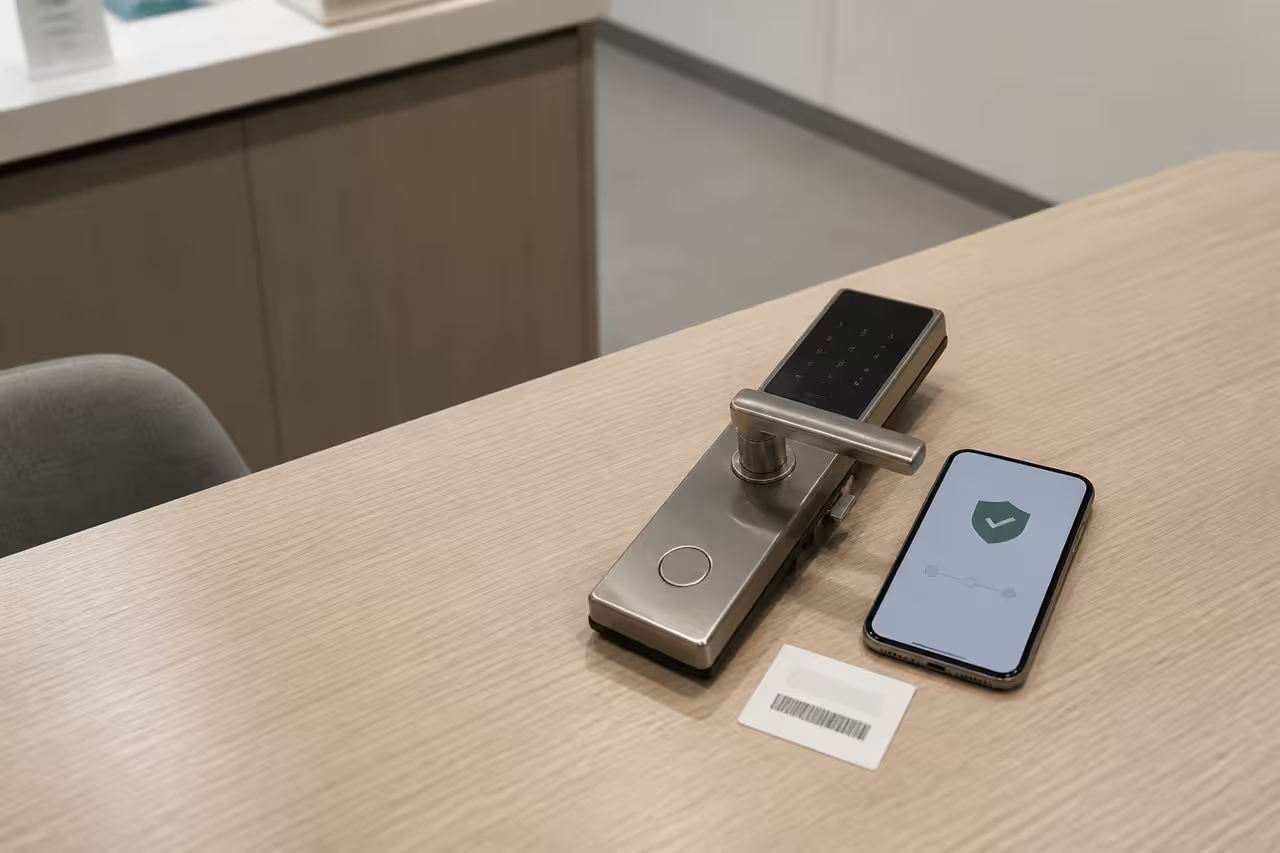
From the user’s perspective, a QR code is simply something to scan with a phone. It may be printed on the device, included in the manual, or attached to the packaging. Regardless of where it is placed, the label can become damaged or disappear. What manufacturers really need to manage is not just the QR code itself, but the device information behind it and the data associated with that specific device.
For Matter devices, the relationships between device identity, commissioning information, and production records affect more than after-sales support. They also play a role in device maintenance, quality traceability, and lifecycle management.
Snowball Technology’s OnBoard™ IoT Security (OBIS) platform helps manufacturers manage the relationships between device identities, security assets, and production data.
By combining device information such as the Rotating Device Identifier (RDI), Vendor ID / Product ID (VID/PID), and Discriminator with existing production records, OBIS can support device identification and record lookup. For example, when the necessary device information is available, an RDI can be verified against the corresponding production data to help establish which device is being identified.
Once the device has been reliably matched to its production record, the manufacturer can use the associated information to support QR-code-free commissioning workflows, subject to the device’s security mechanisms and appropriate authorization. This is why device manufacturing should not end with simply programming data into a chip.
Manufacturers need to establish traceable relationships for each device during production and ensure those records remain accessible and useful throughout the device’s operational life. They also need a reliable way to identify devices in the field and retrieve the corresponding backend records.
Only then can the value of production data extend beyond manufacturing into after-sales support and lifecycle management.
A QR code may become unreadable after a few years. But if the device can still be identified and matched to its original production record, there may still be a way to get it connected again.