From 7,100+ Matter-certified products and the launch of Aliro 1.0 to AI-powered home assistants and the CRA reporting deadline, several key developments are reshaping the smart home industry in 2026.
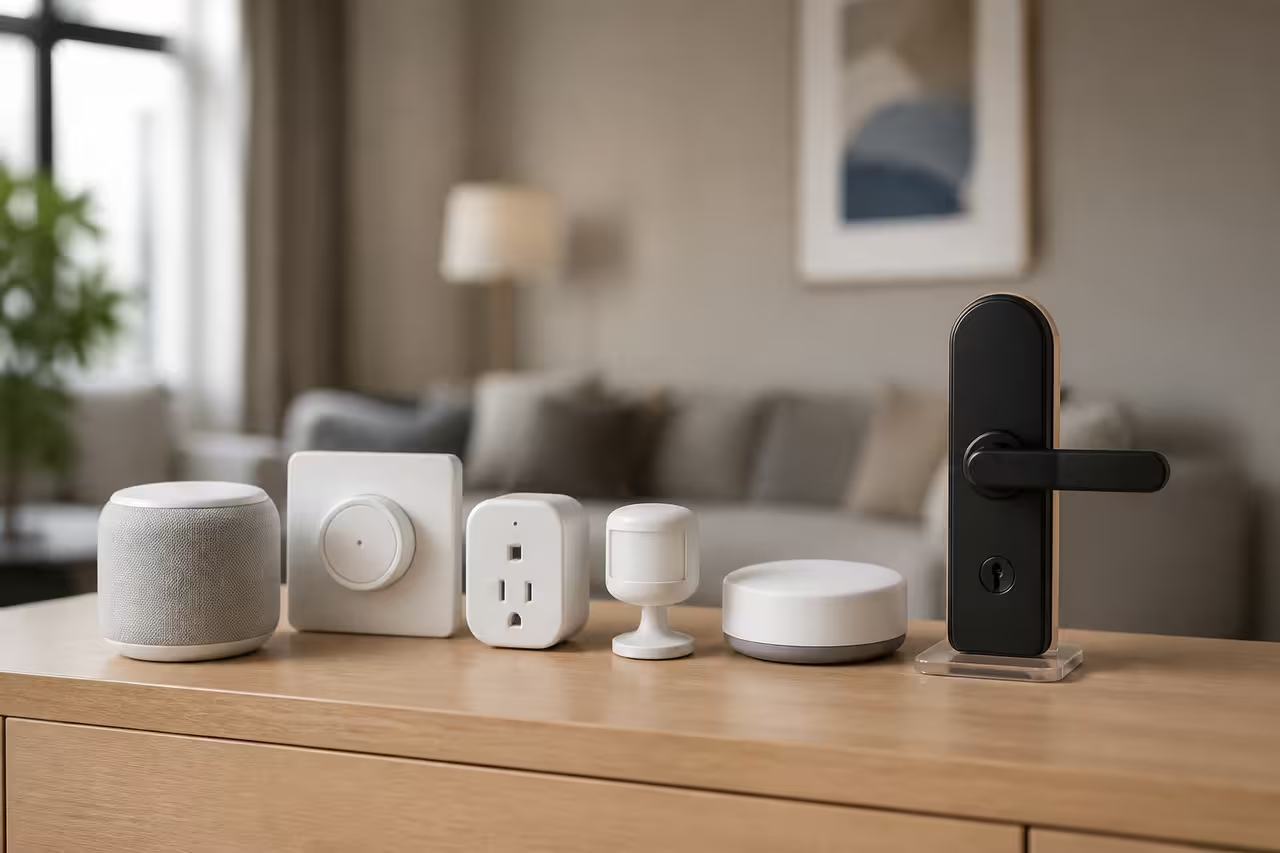
Industry reviews need both trend analysis and concrete numbers and events to serve as reference points. This article highlights several public developments that capture some of the most important changes in the smart home industry in 2026, including the scaling of Matter, the emerging digital key ecosystem, AI assistants, and cybersecurity compliance.
Certification figures are primarily based on information published by the Connectivity Standards Alliance (CSA) and other public disclosures. Product and platform developments are based on information released by the respective companies. Where reliable public data is not yet available, this article does not make estimates.
According to data presented at the 2026 Matter Open Day, the number of Matter-certified products has exceeded 7,100, covering more than 21 device categories. Compared with the early stages of Matter, when adoption was concentrated mainly in lighting, plugs, and sensors, Matter is gradually expanding into more technically complex categories such as cameras and video doorbells.
Beyond certification growth, Matter is also entering a new stage of large-scale adoption by major brands. IKEA previously announced 21 Matter smart home products that are rolling out in 2026, covering lighting, sensors, and control devices. This represents one of the more notable examples of a major brand adopting Matter across a broader product portfolio.
Some of these products were temporarily out of stock in multiple markets. While this alone cannot be used to determine actual sales performance, it does suggest growing market interest in smart home products that can operate across ecosystems.
As Matter expands into more device categories, the industry's focus is also shifting from simply "getting Matter certified" toward reliably integrating and deploying more complex devices. Cameras and video doorbells, for example, typically involve more sophisticated requirements around video streaming, device identity, security authentication, and cross-ecosystem access control. Manufacturers therefore need to address not only Matter certification, but also ongoing device identity management, ecosystem compatibility, and lifecycle maintenance.
At the same time, CSA released Matter 1.6 in 2026, further improving device setup, multi-ecosystem coordination, and device capability representation, providing additional standards support for broader device adoption and long-term ecosystem management.
This means Matter competition is moving from "Do you support Matter?" toward: "Can you deliver multiple Matter product categories at scale, with consistent user experience and reasonable cost?"
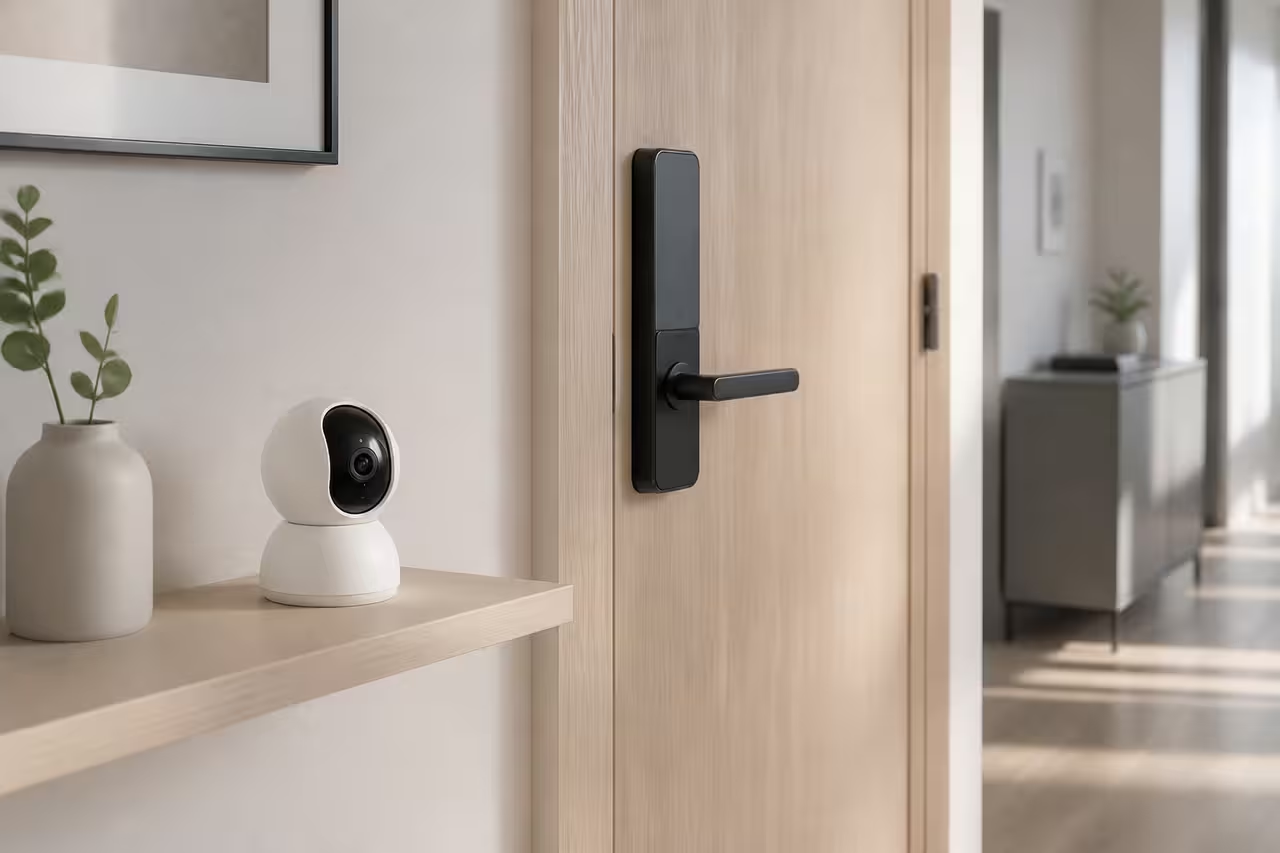
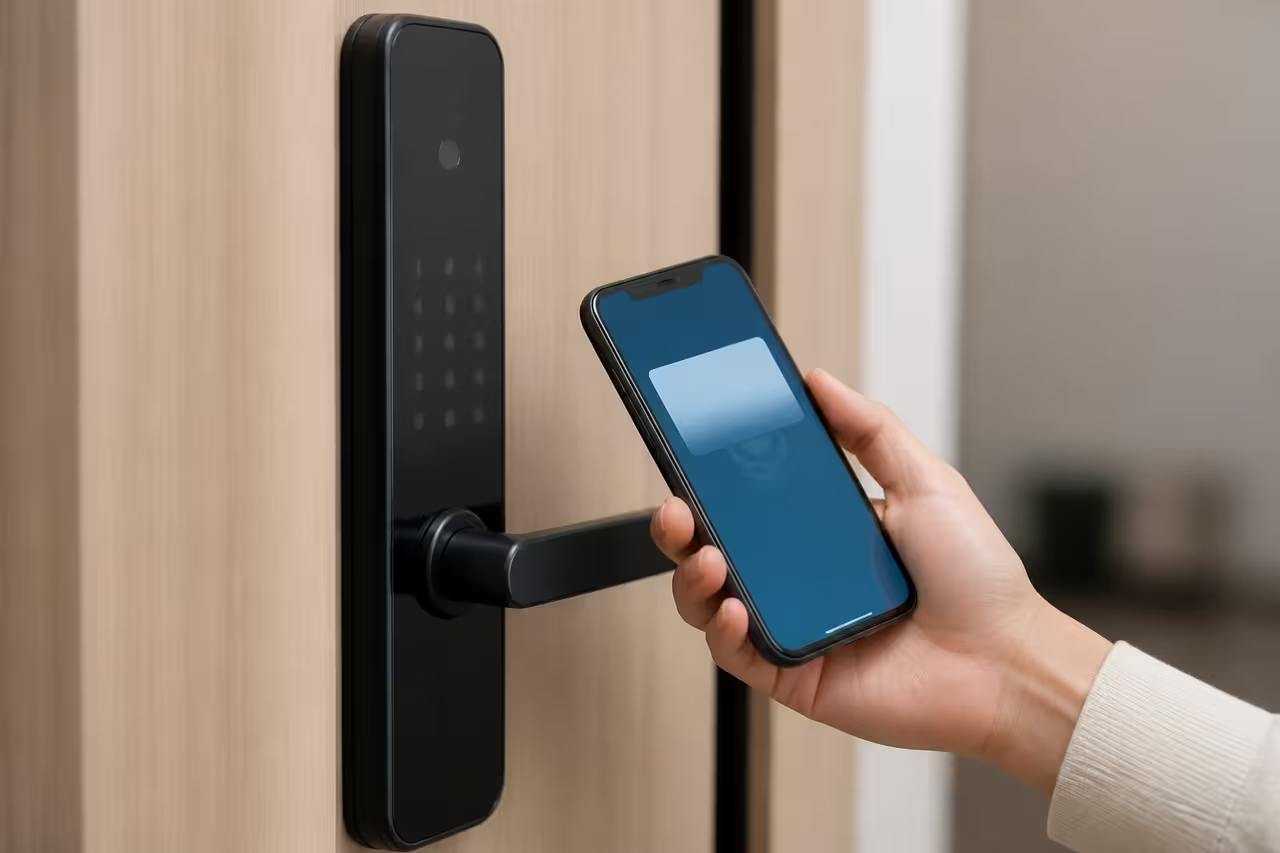
In February 2026, CSA officially released Aliro 1.0. The standard connects smart locks, mobile wallets, and access control systems, aiming to establish a common framework for digital credentials and communication across devices and brands.
Samsung subsequently introduced Samsung Wallet Digital Home Key based on Aliro in selected markets. Apple, Google, and multiple companies across the lock, semiconductor, and access control industries are also participating in the broader ecosystem.
The key question for Aliro's first year may not be how many devices support it. More important is whether smartphone manufacturers, wallet platforms, and lock companies can build a working ecosystem around a common standard. If this trust framework matures, digital keys could expand beyond residential smart locks into apartments, hotels, offices, and other access control scenarios.
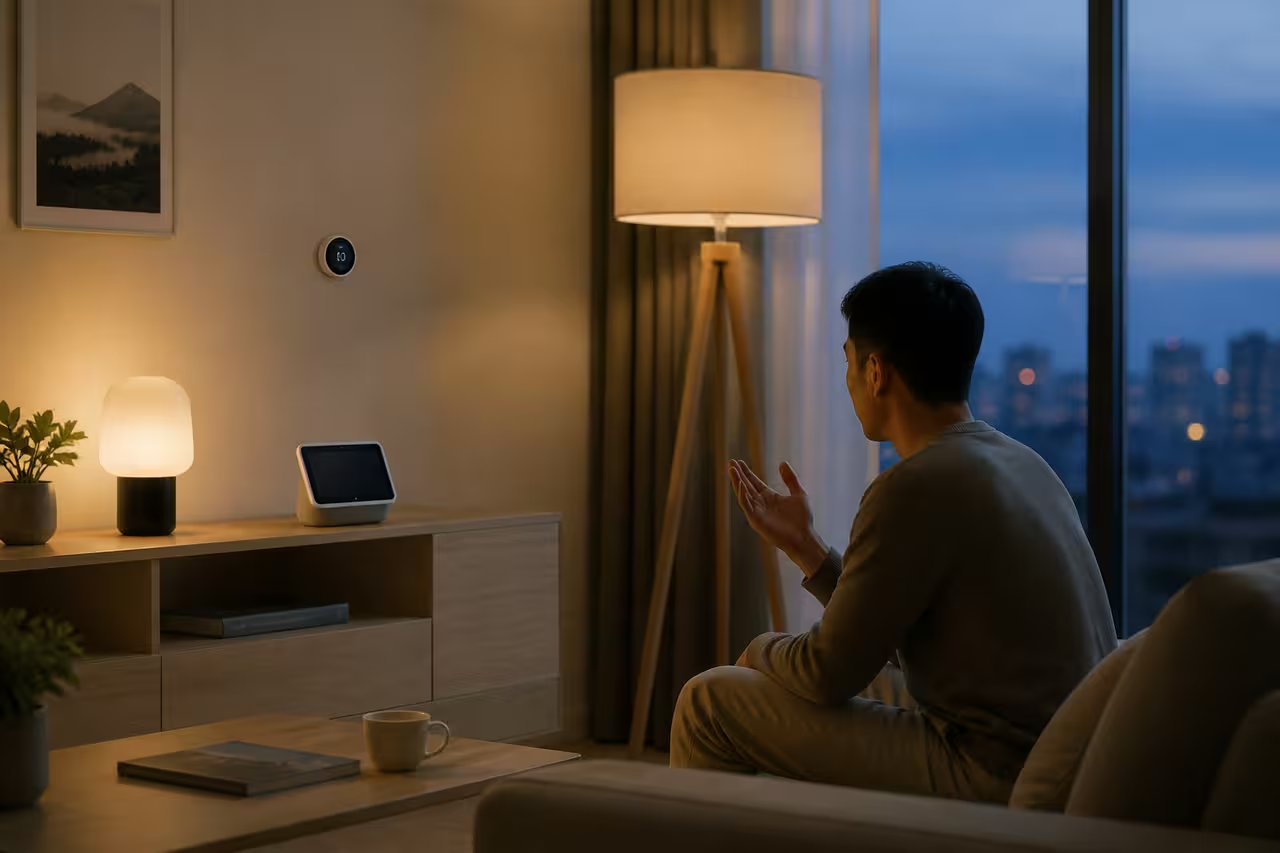
In 2026, Google continues to expand Gemini for Home, while Amazon is extending Alexa+ to more users, devices, and markets. AI assistants are beginning to move smart home interaction beyond fixed voice commands toward more natural conversations and multi-device task coordination. Their real value is not simply generating answers.
The bigger question is whether AI can understand the context of a home, coordinate multiple devices, and translate user intent into executable automation. However, the industry still lacks sufficient long-term data to determine how much AI will actually change device usage patterns or consumer purchasing decisions.
What will be more important to watch is whether AI can meaningfully improve cross-device experiences and gradually replace individual device apps and control panels as the primary interface between users and their smart homes.
The EU Cyber Resilience Act (CRA) reaches its first major compliance milestone in 2026. Reporting obligations for certain vulnerabilities and severe security incidents will begin to apply on September 11, 2026, while the CRA's broader obligations for products with digital elements will apply from December 11, 2027.
For smart home companies, the impact of CRA goes beyond preparing regulatory documentation. Manufacturers increasingly need continuous operational capabilities covering areas such as:
This means that entering global markets requires more than completing ecosystem certifications such as Matter. Manufacturers also need the ability to manage product security after devices have been delivered. Security is shifting from a one-time pre-market validation activity toward an ongoing responsibility throughout the device lifecycle.
Over the past few years, much of Matter's growth has come from relatively basic device categories. Looking ahead, more complex products such as cameras, smart locks, and energy devices are likely to become increasingly important. These products place greater demands on secure device identity, certificate management, and lifecycle maintenance.
As a result, the competitive gap between manufacturers will increasingly be determined not simply by whether they have Matter-certified products, but by how reliably and efficiently they can move from certification and device identity provisioning to mass production.
The first stage of Aliro is not primarily about rapidly increasing the number of supported devices. Its more important role is establishing a common trust foundation between smartphones, wallets, and locks. As with Matter, establishing the standard is only the beginning. The real scale of the market will depend on whether ecosystem participants can turn the standard into commercial products and services. Over the next year, the most important signal for Aliro may therefore not be certification numbers, but whether it begins to reach the mainstream consumer market.
AI may significantly change how users interact with smart home devices, but it does not remove the foundational requirements for trusted devices. Regardless of how the user interface evolves, device identity, security authentication, and lifecycle management will remain essential to trusted operation and global market access.
Looking ahead, several questions will be worth watching:
These questions may appear to cover different areas, but they ultimately point to the same challenge: How can smart devices establish trusted identities within global ecosystems while continuously meeting evolving security and compliance requirements?
The smart home industry is undergoing a shift from connectivity to trust. In the past, much of the industry's competition focused on connecting more devices and enabling interoperability across brands and ecosystems. As Matter, Aliro, AI, and cybersecurity regulations continue to develop, the focus is increasingly moving toward whether devices can be trusted, securely managed, and maintained over time. Devices not only need to connect to ecosystems. They also need to maintain trusted identities, security authentication, and ongoing security capabilities throughout manufacturing, deployment, and operation.
From Matter device certification to Aliro's digital key trust framework and CRA lifecycle cybersecurity requirements, these developments are collectively pushing smart devices beyond simple connectivity toward trusted devices with identity, security, and lifecycle management capabilities.
The companies that lead the next stage of the smart home industry will not simply be those that manufacture devices quickly. They will also need trusted production capabilities spanning device identity, security assets, secure provisioning, and lifecycle management.
As connectivity increasingly becomes a baseline capability, the ability to continuously deliver trusted devices at scale may become a more important source of competitive advantage.